Quality in Wine: Beyond the Scores
When a number seems enough
We live in an age that likes numbers. We rate hotels, restaurants, books, films and, of course, wines. A high score reassures the buyer. A ranking promises guidance. A medal creates confidence.
But there is a question rarely asked honestly: can a number capture quality in wine?
Scores have become a universal language. They make quick decisions easier. They create markets. They generate an appearance of trust. And yet they simplify something that is complex by nature.
Quality is not intensity. It is not concentration. It is not immediate impact. Quality is coherence. It is balance. It is a wine’s ability to make sense in its context: the place it comes from, the table where it is served, the time it lives through.
This piece is not against assessment. It is against reducing quality to a single number. Because when measurement replaces understanding, we lose nuance. And wine lives on nuance.
What quality in wine really rests on
Technically, quality in wine begins with balance. Between alcohol and acidity. Between structure and freshness. Between fruit and tension. A wine can be highly concentrated and still unbalanced. It can have striking aromatic intensity and be tiring by the second glass.
A serious technical assessment looks at:
- coherent phenolic ripeness
- integration of alcohol
- precision of acidity
- balanced texture
- harmonious length
But none of these exists on its own. They relate to each other. A wine at 14% alcohol can be elegant if acidity and structure carry it. A light wine can be extraordinary if it is precise and coherent. Quality does not sit at the extremes. It sits in balance. And that relationship rarely fits whole into a 100-point scale.
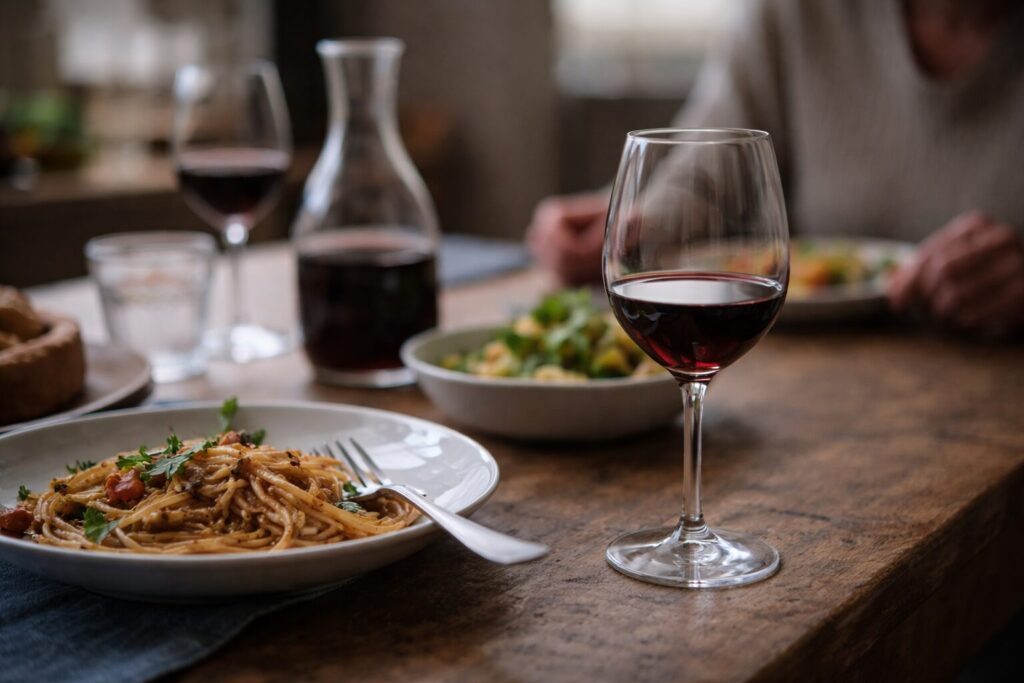
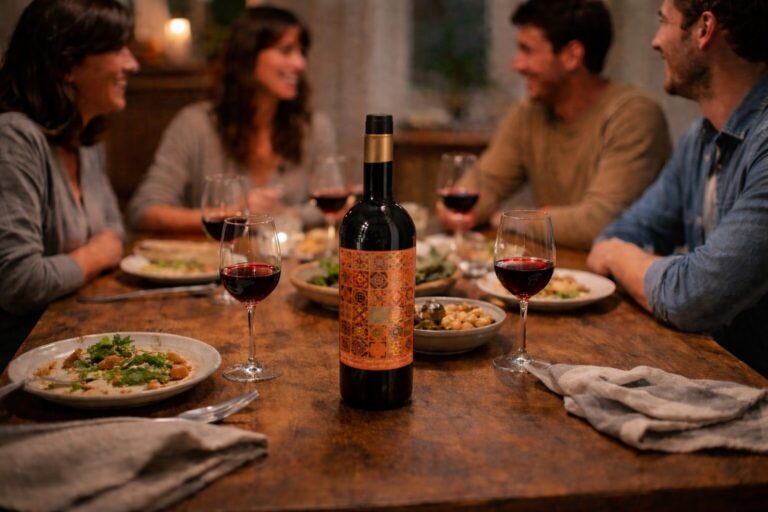
Quality shows itself at the table, not in the ranking.
How the market shaped the idea of quality
Scores did not appear by chance. They met a real need: to guide buyers in an increasingly global market. The problem is not that assessments exist. It is the way they came to dominate the conversation.
When producers begin making wine to impress judges in quick blind tastings, something changes. The emphasis moves to immediate impact: more colour, more extraction, more intensity. These are wines designed to shine for five minutes, not to accompany a two-hour meal.
This is where a common mistake appears: confusing power with quality. A wine can earn 95 points and be hard to drink at the table. It can impress in a technical tasting and fail in the setting where wine is actually drunk.
Quality should not be designed for the stage of competitions. It should be designed for the whole experience.
What drinkers are rarely taught to notice
When we talk about quality in wine, we rarely teach people to notice what really matters. In the glass, quality shows as harmony. The alcohol does not stand out. The acidity does not bite. The texture fits the style of the wine. The finish neither vanishes nor drags on artificially.
Some wines impress at the first sip and tire you by the third. Others grow as you drink them. The difference is integration. A wine of quality follows the rhythm of the meal. It does not compete with it.
And that dimension, the ability to keep company with time, almost never fits into a score.
Are scores objective?
One of the biggest misconceptions is that scores are purely objective. No assessment is neutral. Every critic brings references, preferences and cultural experience. That does not invalidate the assessment. It places it in context.
Another myth is that quality is universal and independent of context. A wine can be extraordinary in its own region, with its own food, and seem strange outside that setting.
Reducing quality to a mark ignores that cultural dimension. Wine is not only a technical product. It is a cultural construction.
Quality as identity
In Portugal, diversity forces us to think about quality more broadly. We have Atlantic regions of marked freshness. Mountain regions with natural tension. Warmer areas where the challenge is to keep balance.
If we judge all these wines by the same narrow standard, we lose richness. Portuguese quality rarely lies in excess. It lies in identity. And identity cannot be measured with numbers alone.
Quality is coherence
Quality in wine is not a race for points. It is a wine’s ability to be coherent with itself. To respect the place it comes from. To balance technique and purpose. To accompany the table without imposing itself.
Scores can guide. But they do not replace critical judgement, experience and context. Perhaps the challenge is not to abandon numbers. It is to learn to put them in their place.
Because in the end, real quality shows when the wine has gone from the glass and stays in the memory.
Further reading
- Blend or Single Variety: Which Is the Better Choice? (Casca Wines Journal): different technical and cultural approaches in the vineyard, and how they shape a wine’s style, coherence and expression.
In the glass
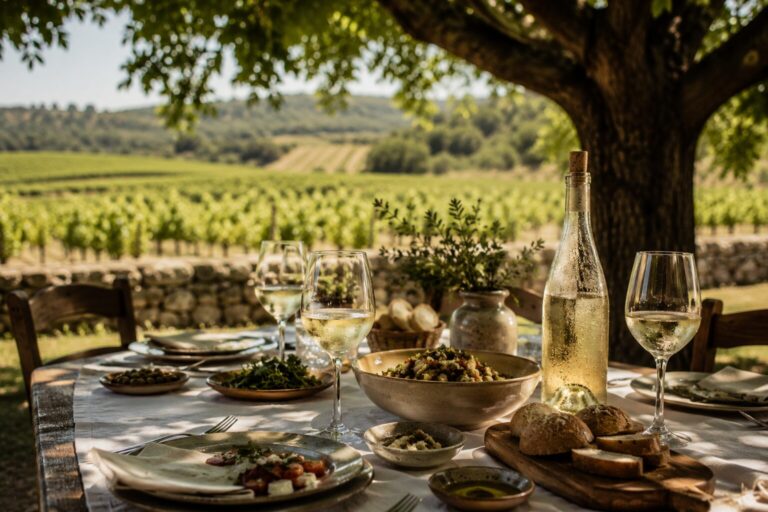
Harmonious wines, where alcohol, acidity and texture move together. A fine example is Cabo da Roca Reserva Arinto Lisboa, a white of Atlantic freshness with minerality and vibrant acidity that brings balance and presence to the glass without relying on power.
At the table
Meals where the wine disappears into the dish and reappears in the memory. Monte Cascas Reserva Douro Red is a Douro red with firm structure and integrated tannins, made for robust dishes without taking over the table.
If you want to taste this
Start with wines made for the table and for time, not just to impress in a quick tasting. 1808 Tinta Roriz Beira Interior Red has character and balance, firm tannins and a long finish: a wine that grows as the evening moves from food to conversation.